
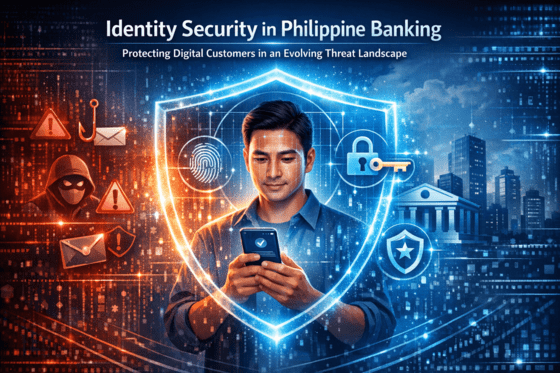
Digital banking is growing rapidly in the Philippines — and so are identity-based cyber threats.
As financial services move online, attackers are increasingly targeting user identities rather than systems. Strengthening identity assurance is becoming essential for protecting customers, reducing fraud, and maintaining trust in digital banking.
The Philippine financial sector is undergoing a rapid digital transformation.
Mobile banking, digital onboarding, and emerging open banking initiatives are allowing financial institutions to reach more customers and deliver faster, more convenient financial services.
But as banking becomes more digital, the cybersecurity landscape is evolving as well.
Today, many cyberattacks targeting banks no longer begin with systems or infrastructure. They begin with identity. Attackers are increasingly attempting to impersonate legitimate users rather than exploit traditional system vulnerabilities. As a result, identity has become one of the most critical security frontlines in modern banking environments.

Financial institutions are now facing growing risks from identity-driven attacks such as:
- Account takeover
- Synthetic identity fraud
- Phishing-driven credential compromise
- Insider access misuse
As digital banking channels continue to expand, protecting identities — both customer and workforce — has become essential to maintaining trust in financial services.
Identity Assurance Is Becoming a Regulatory Priority
Regulators are also recognizing the importance of stronger identity protections in digital financial services. The Bangko Sentral ng Pilipinas (BSP) has increasingly emphasized the need for stronger authentication and identity assurance mechanisms to address the growing risks associated with digital banking and online fraud. Recent regulatory guidance highlights the use of server-side biometric authentication, a model that ensures biometric credentials are securely validated and protected from manipulation at the device level.
These developments reflect a broader regulatory shift: identity assurance is becoming a key component of operational resilience and financial stability.
For financial institutions, identity security is no longer just a cybersecurity control. It is now closely tied to risk management, regulatory compliance, and customer protection.
Moving Beyond Password-Based Authentication
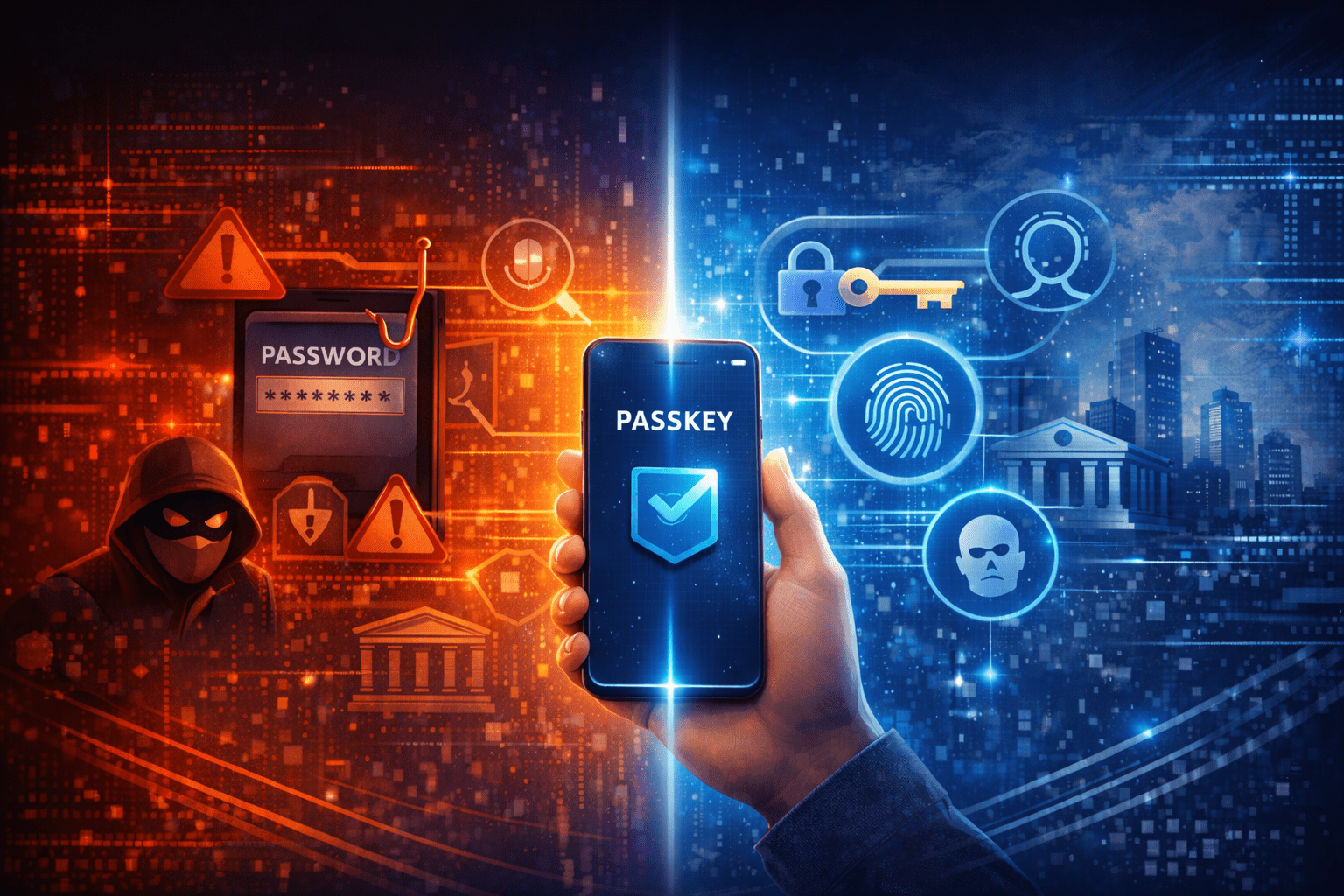
Traditional authentication methods such as passwords and one-time passcodes have long played an important role in banking security. However, these mechanisms remain vulnerable to phishing, social engineering, and credential theft. To address these challenges, financial institutions around the world are increasingly adopting phishing-resistant authentication frameworks.
Technologies based on standards developed by the FIDO Alliance — particularly FIDO2 — enable passwordless authentication methods that significantly reduce the risk of credential compromise.
One example is passkey-based authentication, which replaces passwords with cryptographic keys securely stored on trusted devices. Because these credentials cannot be reused, shared, or intercepted by attackers, they provide strong protection against phishing and credential-based attacks.
As digital banking adoption continues to grow, these modern authentication methods are becoming an increasingly important part of identity security strategies.
Strengthening Authentication for a Major Philippine Bank
In a recent engagement, our team had the opportunity to support one of the Top 10 banks in the Philippines in strengthening their defenses against phishing and credential compromise.
The initiative focused on improving the institution’s identity security framework through:
- Passwordless authentication aligned with FIDO2 standards
- Secure device binding to verified user identities
- Improved protection against phishing and social engineering attacks
By implementing these capabilities, the bank strengthened its ability to protect customer accounts while supporting the evolving security expectations of digital banking services.
This experience reflects a broader trend across the financial industry: stronger identity assurance is becoming a key pillar of cybersecurity strategy.
Identity Security Across the Entire Digital Lifecycle
While stronger authentication is essential, identity security today goes far beyond login mechanisms.
Modern identity frameworks must protect the entire lifecycle of a digital identity, including:
- Digital Identity Proofing – verifying that a customer is legitimate during digital onboarding.
- Biometric Identity Binding – securely linking biometric credentials to verified identities.
- Phishing-Resistant Authentication – reducing reliance on passwords and vulnerable authentication factors.
- Workforce Identity Governance – ensuring employees and privileged users have only the access necessary to perform their roles.
When these capabilities work together, they create a stronger foundation for protecting both customer identities and internal banking systems.